

Useful Documents
Other Standards
Recognition
Contact Us
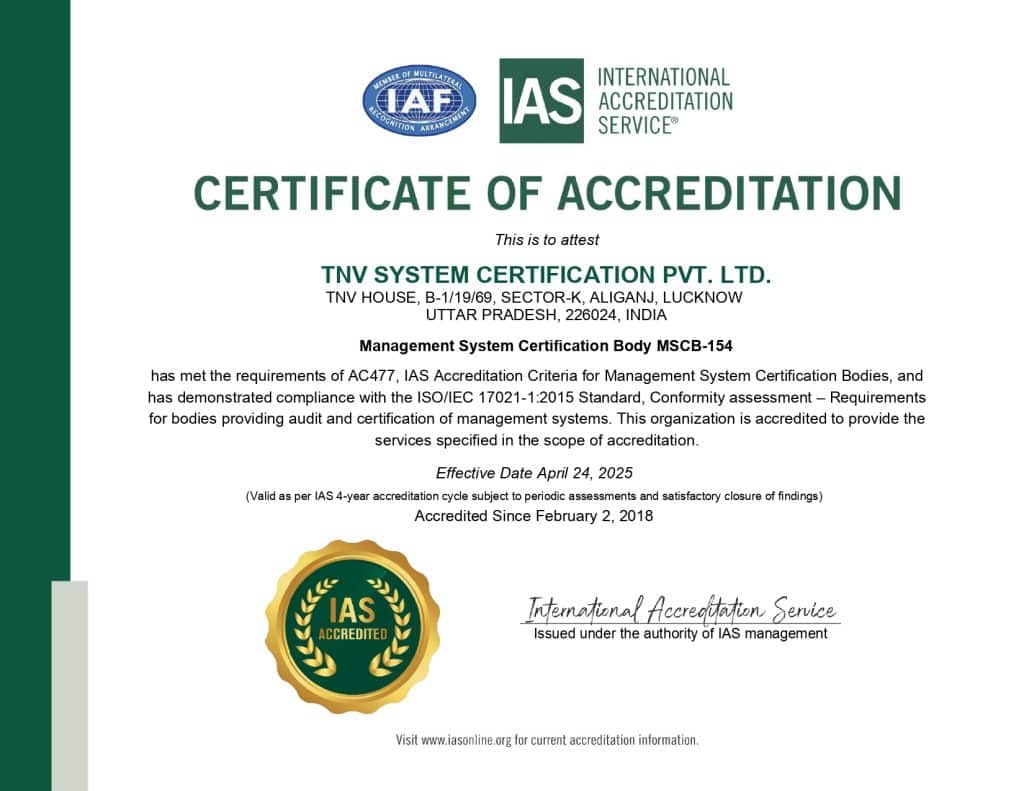
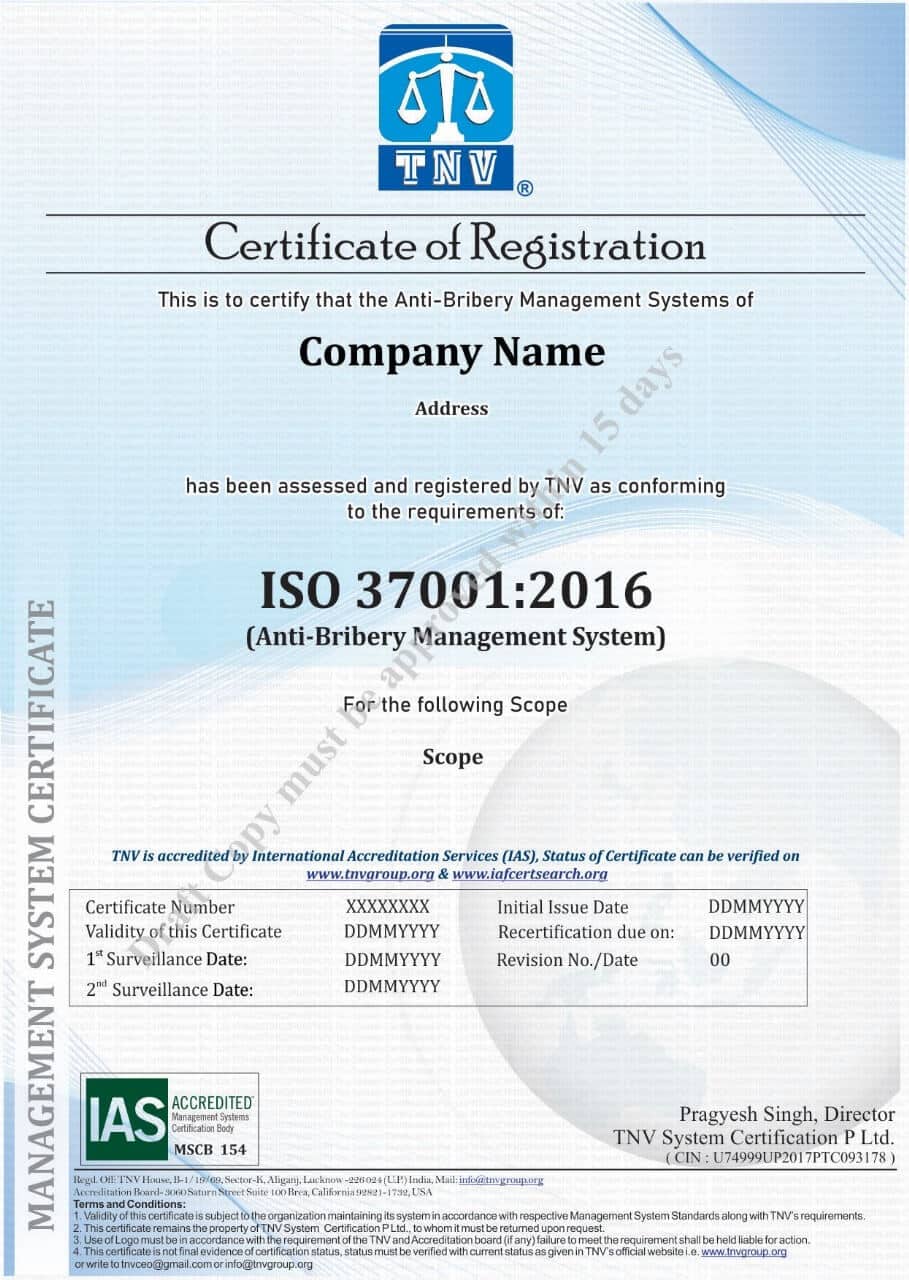
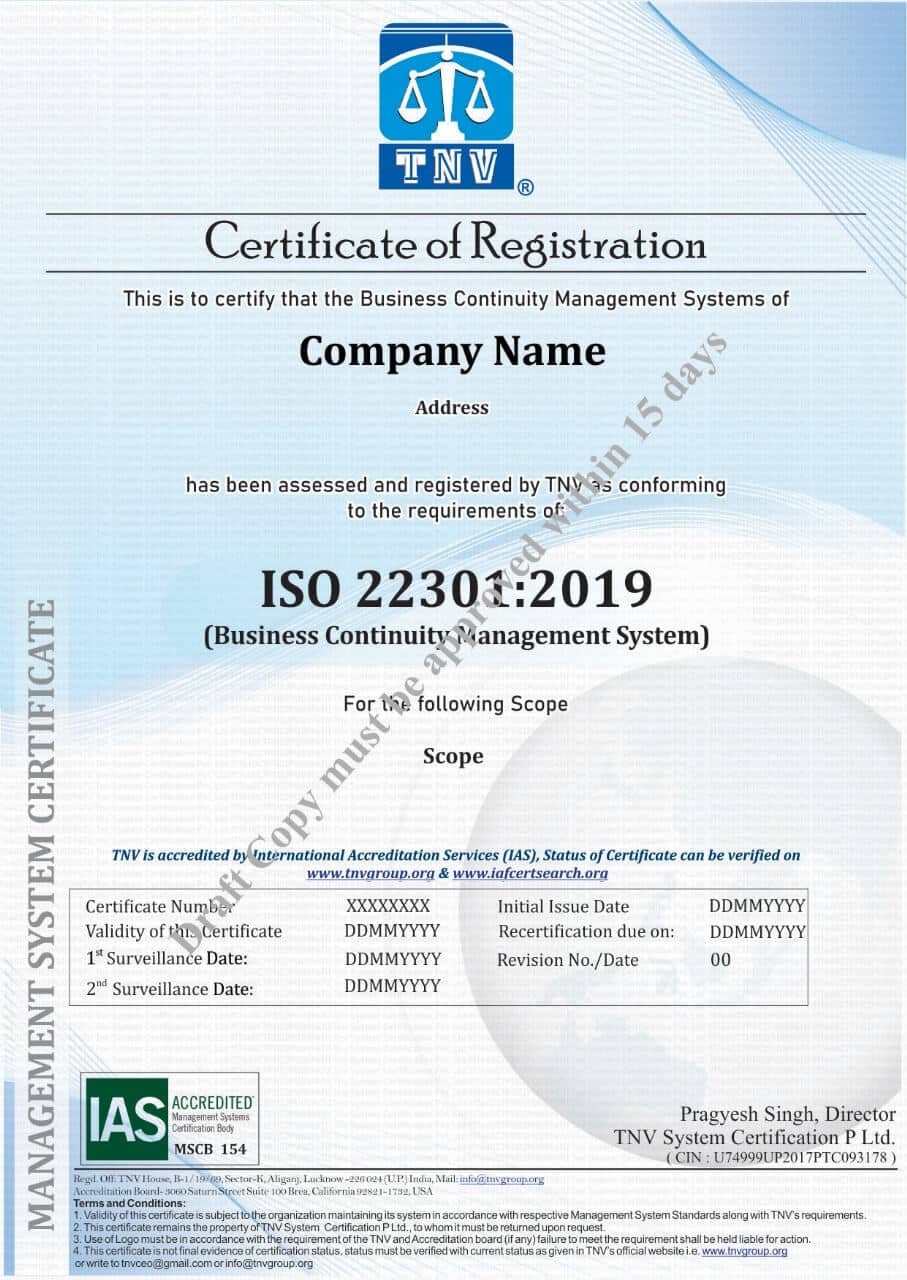
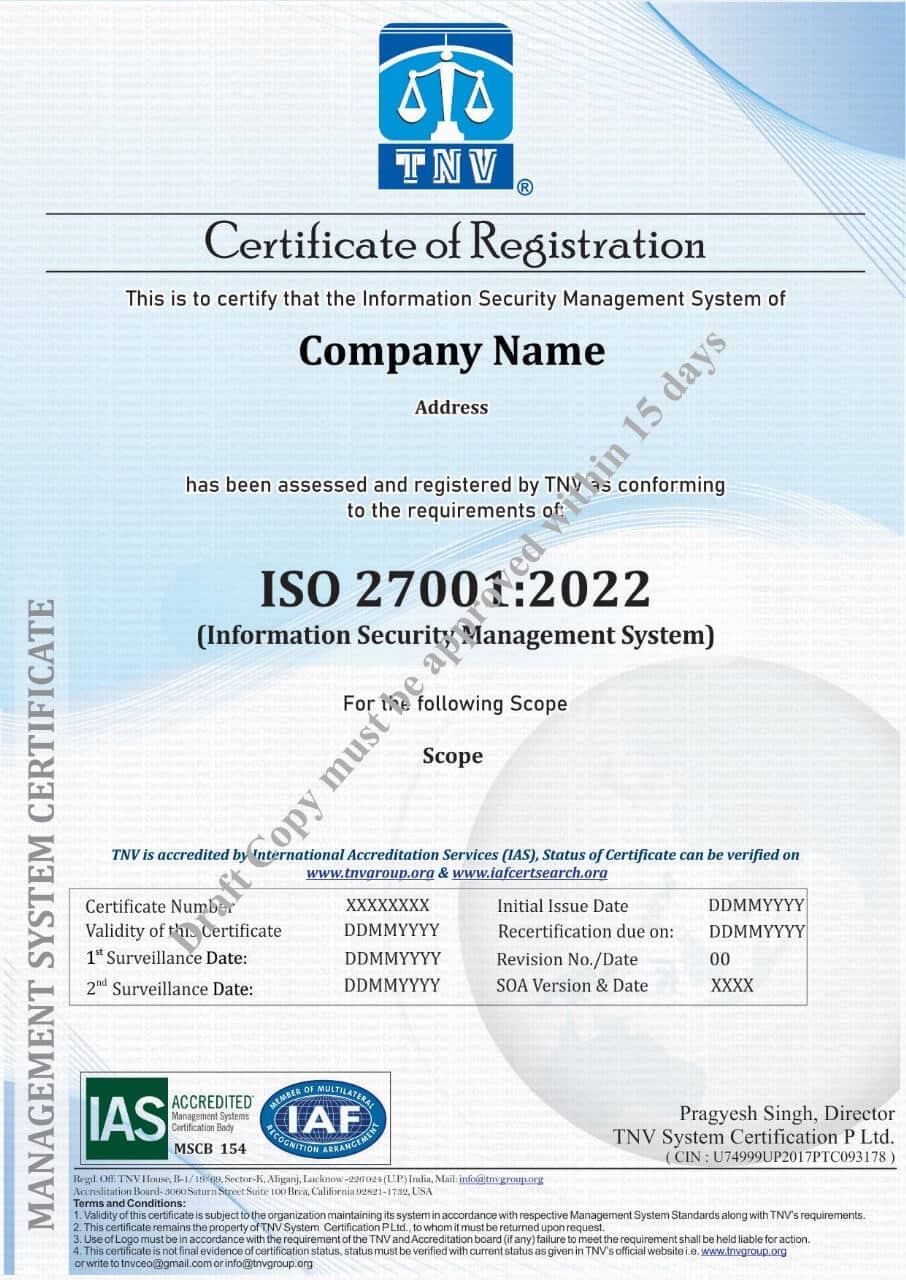
Sample Certificate
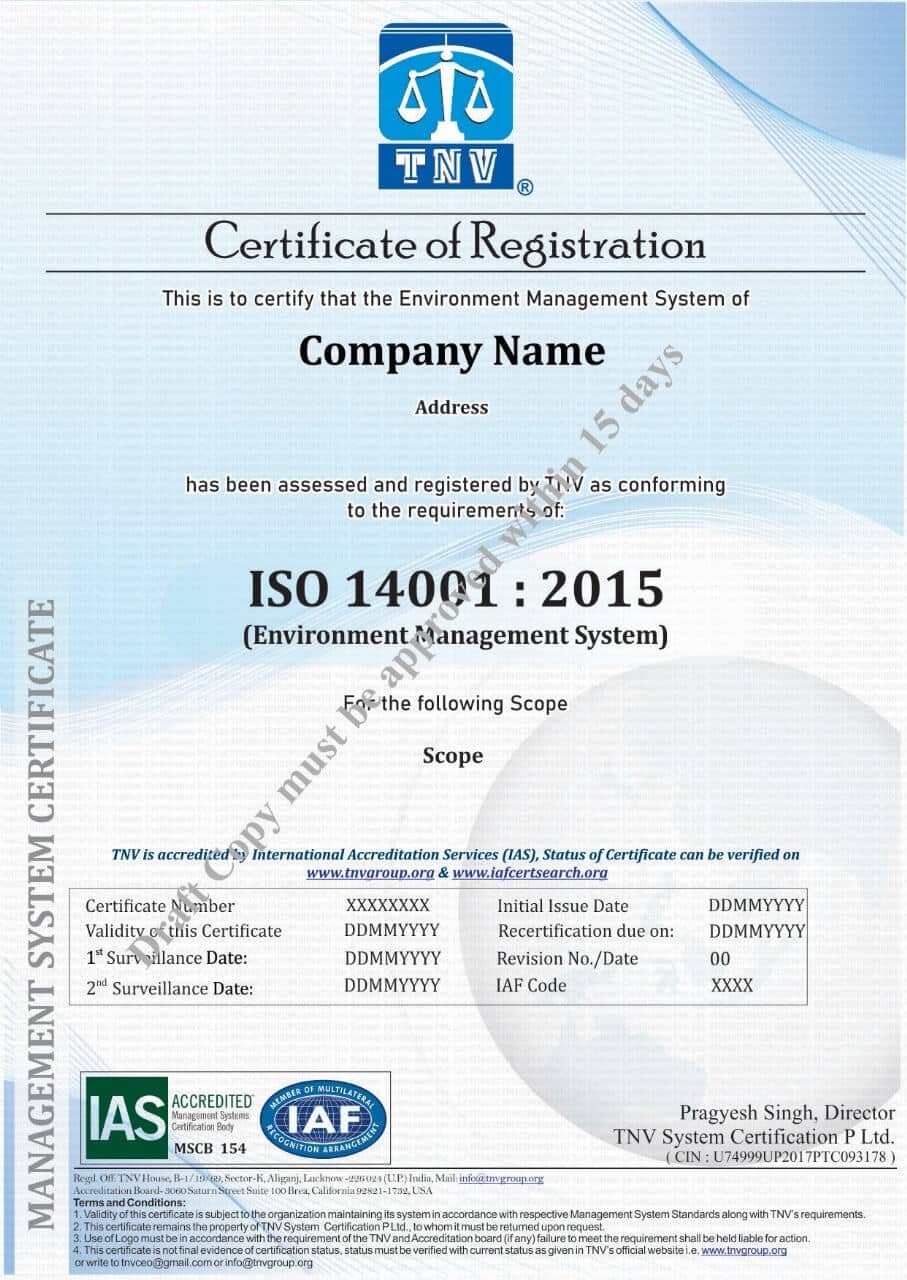
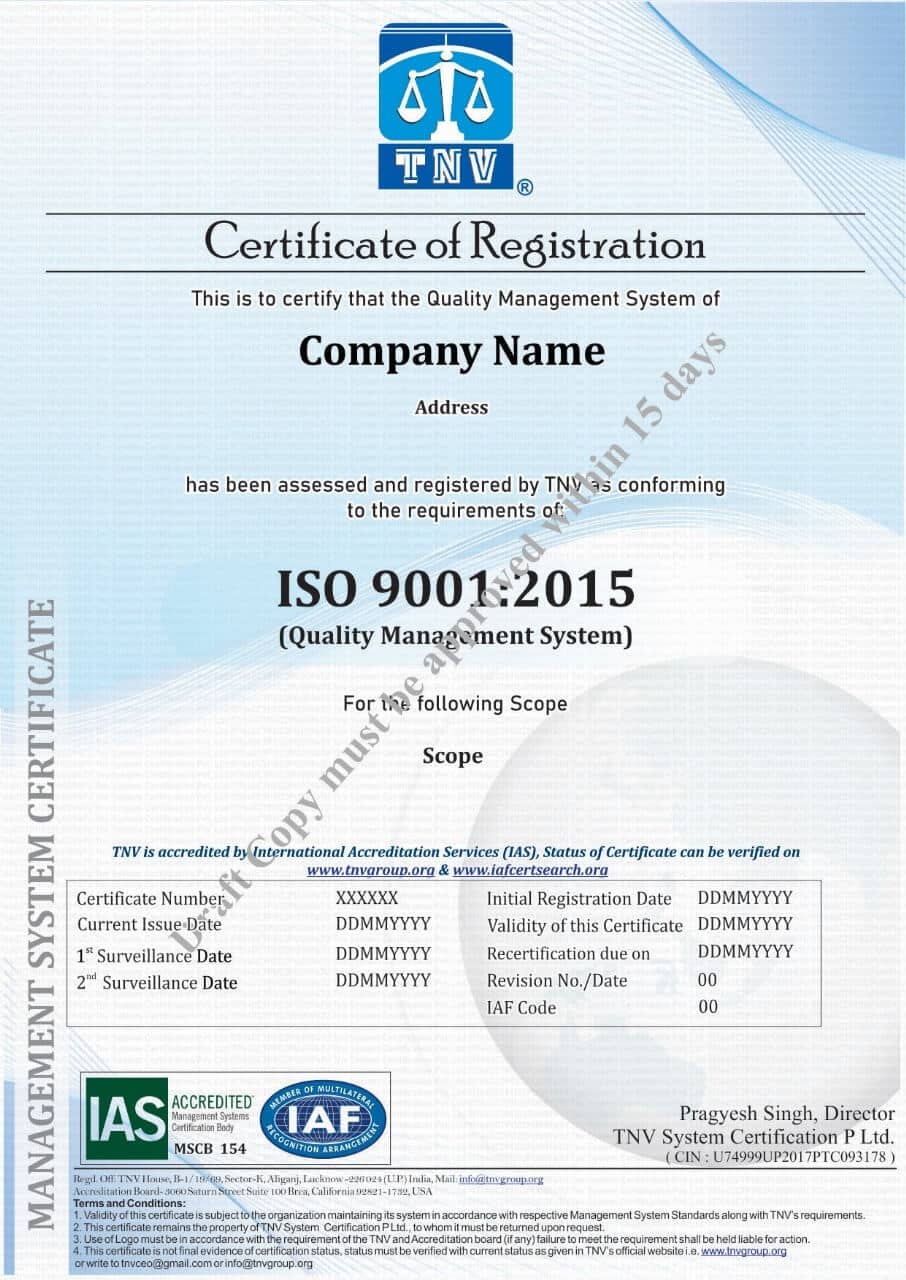
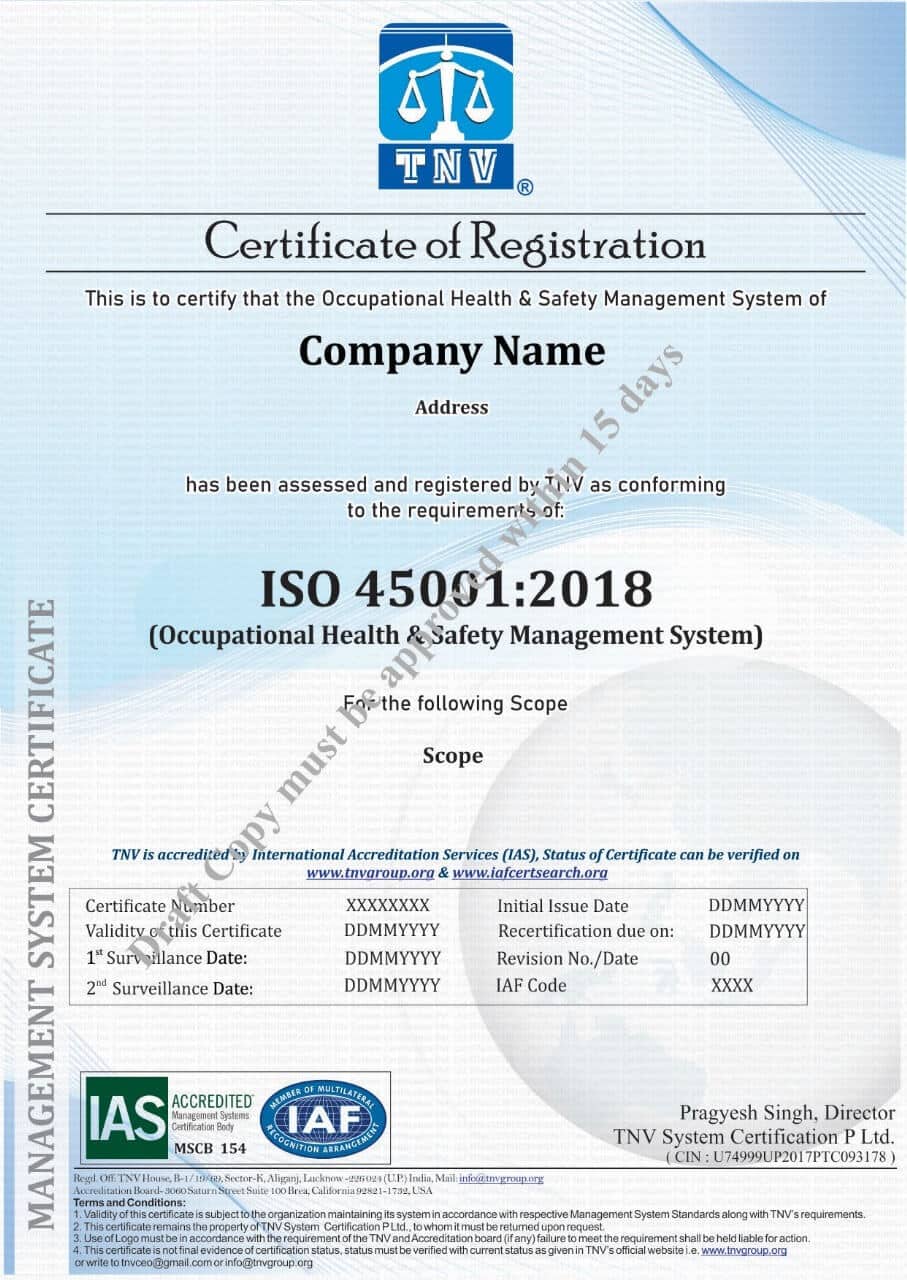
ISO 45001:2018 is the international standard for Occupational Health & Safety Management Systems (OHSMS). It gives organisations a clear framework to identify hazards, assess and control OH&S risks, and improve safety performance in a structured, consistent way.
When an organisation becomes certified to ISO 45001:2018 through an independent certification body like TNV System Certification, it demonstrates that it has a formally established system to prevent work-related injuries and ill health, comply with OH&S legislation, and foster a strong safety culture. This not only protects workers but also supports business continuity, legal compliance and stakeholder confidence.
What ISO 45001:2018 Covers
The standard is built around the ISO “High-Level Structure”, which makes it easier to integrate with other management system standards such as ISO 9001 and ISO 14001. ISO 45001 is divided into clauses that move logically from understanding your organisation, to planning and operating the system, to evaluating performance and improving it.
In simple terms, ISO 45001 asks an organisation to:
- Understand its context and stakeholders
- Show clear leadership commitment and worker participation
- Identify hazards and OH&S risks in a structured way
- Plan and implement controls and emergency preparedness
- Monitor performance and conduct internal audits
- Investigate incidents and drive continual improvement
The emphasis is on prevention, participation and integration with the organisation’s overall strategy.
Structure of ISO 45001:2018 – Clause Overview
The main requirements of the standard are grouped from Clauses 4 to 10. In practice, they fit together as one continuous system:
Context of the Organisation (Clause 4)
The organisation identifies internal and external issues that affect OH&S, defines who its workers and other interested parties are, and determines the scope of the OHSMS. This ensures the system is aligned with real conditions and strategic direction.
Leadership and Worker Participation (Clause 5)
Top management is required to show clear commitment to OH&S, establish an OH&S policy, assign roles and responsibilities, and promote consultation and participation of workers. ISO 45001 expects OH&S to be led from the top but built with input from those doing the work.
Planning (Clause 6)
Here the organisation plans how to address risks and opportunities. This includes systematic hazard identification, OH&S risk assessment, legal and other requirements, and setting OH&S objectives. Planning also covers how those objectives will be achieved.
Support (Clause 7)
ISO 45001 requires adequate resources, competent people, awareness, effective communication and control of documented information. In short, the system must be supported by the right people, tools, and documentation.
Operation (Clause 8)
This clause focuses on operational planning and control. It covers how the organisation manages its activities, contractors, outsourced processes and emergency preparedness and response, so that the controls identified during planning are actually put into practice.
Performance Evaluation (Clause 9)
The organisation must monitor and measure OH&S performance, evaluate compliance, conduct internal audits and hold management reviews. This provides management with a complete picture of whether the system works as intended.
Improvement (Clause 10)
Finally, ISO 45001 requires organisations to react to incidents and nonconformities, take corrective actions, and continually improve the OHSMS. The expectation is that the system will evolve as conditions, risks and lessons learned change over time.
Key Benefits of ISO 45001:2018 Certification
Implementing and achieving certification to ISO 45001:2018 delivers substantial benefits to organizations, including enhanced workplace safety, reduced incident rates, improved employee morale and productivity, legal compliance assurance, and protection of your organization’s reputation. The standard helps create a strong safety culture, demonstrates commitment to worker welfare, reduces costs associated with workplace accidents and insurance premiums, and provides a competitive advantage in tenders and contracts.
Who Can Apply for ISO 45001:2018 Certification?
ISO 45001:2018 is designed to be applicable to any organisation with workers, regardless of its size, type or location. Both small and large organisations can implement an OHSMS and seek certification.
Typical users include:
- Manufacturing units and engineering facilities
- Construction companies and project-based organisations
- Oil, gas, power and other high-risk industries
- Logistics, warehousing and transport operations
- Hospitals, clinics and healthcare providers
- Educational institutions and training organisations
- IT and service providers with office or mixed environments
- Public-sector bodies and local authorities
Whether the work is carried out in factories, offices, construction sites or field locations, ISO 45001 provides a framework that can be tailored to the organisation’s actual hazards and risks.
What an Organisation Should Have in Place Before Certification
Before approaching an accredited certification body such as TNV System Certification, an organisation should already have its Occupational Health & Safety Management System established and operating.
At a high level, this means:
- An OH&S policy and objectives approved by top management
- Processes for hazard identification and OH&S risk assessment
- Controls implemented to manage significant OH&S risks
- Evidence of compliance with applicable OH&S laws and other requirements
- Training and competence records for relevant personnel
- Internal audits carried out, and at least one management review completed
- Documented information and records maintained in line with the standard
The system does not need to be perfect, but it should be functioning and capable of being audited across the relevant departments, shifts and sites.
Steps to Achieve ISO 45001:2018 Certification
The journey to ISO 45001 certification usually follows a logical sequence inside the organisation, followed by external assessment.
- Design and Establish the OHSMS
The organisation develops its OH&S policy, determines its scope, identifies hazards and risks, and puts in place controls, procedures and responsibilities. - Document Key Elements
Core processes, methodologies for risk assessment, emergency plans, legal compliance processes and important operational controls are documented at a level appropriate to the organisation’s size and complexity. - Implement Across the Organisation
The system is rolled out to all relevant functions and locations. Workers are made aware of their OH&S responsibilities, trained where needed, and encouraged to participate in safety-related activities. - Conduct Internal Audits
Internal audits verify whether the system is implemented as intended and whether it meets the requirements of ISO 45001. Gaps and weaknesses are identified for correction. - Hold a Management Review
Top management reviews OH&S performance, audit results, incidents, legal compliance status and resource needs, and confirms the direction for improvement. - Select a Certification Body and Undergo External Audits
An accredited, independent certification body such as TNV System Certification is engaged to carry out Stage 1 (documentation and readiness) and Stage 2 (implementation and effectiveness) audits. - Address Nonconformities and Receive Certification
If any nonconformities are found during the certification audit, the organisation implements corrective actions. Once these are verified as effective, a certification decision is made and, if positive, the ISO 45001:2018 certificate is issued.
Maintain the System and Participate in Surveillance
After certification, the organisation maintains and continually improves its OHSMS and undergoes periodic surveillance audits as part of the certification cycle.
Documents and Records Commonly Reviewed for ISO 45001:2018
ISO 45001 allows flexibility in how documented information is structured. However, certain categories of documentation and records are typically expected during an audit.
On the documentation side, this may include:
- The defined scope of the OHSMS
- OH&S policy and OH&S objectives
- Methods for hazard identification and OH&S risk assessment
- Descriptions of key processes and operational controls
- Emergency preparedness and response arrangements
- Approaches for identifying and complying with legal requirements
From a records perspective, an organisation should be able to show evidence such as:
- Risk assessments and implementation of control measures
- Training and competence records for workers and relevant contractors
- Incident and accident investigations and corrective actions
- Monitoring and measurement results for OH&S performance indicators
- Internal audit reports and associated follow-up
- Minutes of management review meetings
These records demonstrate not only that processes exist on paper, but also that they are used and effective.
ISO 45001:2018 Certification with TNV System Certification
As an independent certification body, TNV System Certification follows a structured, impartial process to assess conformity with ISO 45001:2018.
The certification process generally consists of:
- Application and Review – You provide basic information about your organisation, activities, size and locations. We review this to confirm the scope and determine audit time in line with accreditation rules.
- Stage 1 Audit – We review your documented information, readiness, and understanding of the standard, confirm your scope, and identify any significant issues that may affect the Stage 2 audit.
- Stage 2 Audit – Our auditors visit your site(s) to evaluate how the OHSMS is implemented and how effectively it operates. They interview personnel, observe activities, and review records to gather objective evidence.
- Corrective Action and Review – Where nonconformities are identified, you take corrective action and provide evidence. We verify these actions before proceeding.
- Certification Decision – An independent function within TNV System Certification reviews the audit file and makes the final certification decision.
- Issuance of Certificate – If the decision is positive, an ISO 45001:2018 certificate is issued, and your organisation is listed as a certified client.
- Surveillance and Recertification – Periodic surveillance audits and a recertification audit at the end of the cycle ensure that the system continues to meet the requirements and remains effective.
Throughout this process, TNV System Certification operates in accordance with applicable accreditation requirements, with a strong focus on impartiality, competence and transparency.
Cost Considerations
The cost of ISO 45001:2018 certification is not fixed; it depends on the characteristics of the organisation. Typical factors include:
- Total number of employees
- Number and location of sites to be included in the scope
- Nature and complexity of activities and OH&S risks
- Existing level of system implementation and documentation
Based on the information you provide in the application or enquiry form, TNV System Certification prepares a proposal that includes audit time, audit programme and associated fees. This ensures that the certification process is scaled appropriately to your organisation.
How to Apply for ISO 45001:2018 Certification
If your organisation is planning to obtain ISO 45001:2018 certification with TNV System Certification, the next steps are straightforward:
- Request or download the enquiry/application form from our website
- Provide information about your organisation, activities, employee strength, locations and desired scope
- Indicate whether you wish to combine ISO 45001 with other standards
- Submit the form via email or through the contact section on the site
Our team will review the details and respond with a tailored proposal and explanation of the certification process specific to your organisation.
Begin Your Certification Journey
Investing in ISO 45001:2018 certification demonstrates your organization’s commitment to creating a safe, healthy work environment where employees can thrive. With TNV System Certification as your partner, you gain more than a certificate—you gain a pathway to sustainable safety excellence, operational efficiency, and organizational resilience.
Contact TNV System Certification today to discuss your ISO 45001:2018 certification needs. Our team is ready to help you build a world-class occupational health and safety management system that protects your people, enhances your reputation, and drives business success.